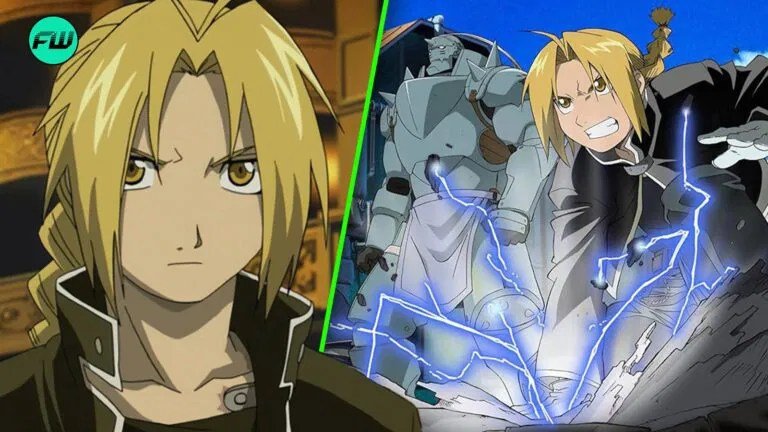
For years, the internet has been a fertile ground for speculation, fan theories, and sometimes, outright mythical crossovers. One such persistent rumor that often piques the curiosity of anime fans is the idea of "Usopp in Fullmetal Alchemist Brotherhood." Let's be clear from the outset: the beloved sniper from the Straw Hat Pirates, Usopp, does not appear in Fullmetal Alchemist: Brotherhood. This flagship Super Pillar hub is here to unravel why this myth exists and firmly ground you in the truth of both Fullmetal Alchemist universes.
We understand the allure of imagining two iconic series colliding, but understanding the distinct narrative integrity of Fullmetal Alchemist: Brotherhood is key. It's a universe rich with its own complex characters, deep lore, and a self-contained story that faithfully adapts Hiromu Arakawa's original manga.
Setting the Record Straight: The Crossover Myth Debunked
The notion of Usopp making an appearance in Fullmetal Alchemist: Brotherhood is entirely unfounded within the official canon. There has never been an official crossover manga chapter, anime episode, or movie that features characters from One Piece interacting with the world of Amestris. While the idea might spark interesting fan fiction or creative artwork online, it remains purely speculative.
Often, such myths gain traction due to misremembered details, fan-made content circulating as official, or perhaps even a general misunderstanding of how anime canon operates. Official crossovers are rare and meticulously planned, never subtly slipped into a major series like Brotherhood. To truly grasp why this crossover is a myth, it's essential to understand the distinct and rich world Brotherhood built. We invite you to explore a breakdown of popular anime crossover myths and why they gain traction to see how such ideas often take hold.
Understanding Fullmetal Alchemist: Brotherhood's Canonical World
Fullmetal Alchemist: Brotherhood is celebrated for its faithful adaptation of the manga, creating a coherent and deeply engaging narrative. Set in the steampunk-inspired nation of Amestris, the story revolves around Edward and Alphonse Elric, two brothers on a quest to restore their bodies after a forbidden attempt at human transmutation. Their journey introduces them to state alchemists, powerful Homunculi, and a vast conspiracy that threatens the entire world.
The series is meticulously crafted, with every character, plot point, and lore detail serving the overarching story of equivalent exchange, sacrifice, and the search for truth. Introducing a character from an entirely different universe, with different powers and motivations like Usopp, would fundamentally disrupt the carefully constructed balance and thematic integrity of Brotherhood. For a deep dive into this incredible world, consider the intricate lore of Amestris, alchemy, and the Homunculi in *Brotherhood*.
The Distinctive Character Roster
Fullmetal Alchemist: Brotherhood boasts an unforgettable cast of characters, from the determined Elric brothers and the charismatic Roy Mustang to the enigmatic Father and the diverse Homunculi. Each character has a specific role, background, and connection to the overarching plot.
Usopp, with his unique skillset, personality, and ties to the Grand Line, simply has no place within Amestris. His presence would not only be anachronistic but would also overshadow the existing narrative, which is already packed with compelling individuals driving the story forward. You can learn more about these pivotal figures by reading a comprehensive look at the canonical characters and their roles in *Fullmetal Alchemist: Brotherhood*.
The Fidelity of Brotherhood's Narrative
Unlike the 2003 Fullmetal Alchemist anime, which diverged significantly from the manga's storyline and introduced its own ending involving a crossover to "our world" (albeit without One Piece characters), Fullmetal Alchemist: Brotherhood stuck rigorously to Hiromu Arakawa's original vision. This commitment to the source material meant a consistent world, consistent rules, and a consistent cast.
Brotherhood's narrative arc builds steadily towards a powerful and emotional climax, culminating in Father's defeat and the Elric brothers' triumphant reunion, having sacrificed their alchemy for their original bodies. There are no surprise appearances from other franchises; the story is entirely focused on its own characters finding their resolution within their own universe. Understanding these narrative choices helps solidify why a crossover with Usopp would be impossible in this version. For a clearer picture of these differences, we recommend checking out the crucial differences between the 2003 *Fullmetal Alchemist* and *Brotherhood*'s narratives.
The End of the Journey: A Satisfying, Self-Contained Conclusion
The ending of Fullmetal Alchemist: Brotherhood is widely lauded for its emotional depth and narrative completeness. The Elric brothers achieve their goals, giving up alchemy for a future where they can live full lives, explore the world, and build families. This conclusion ties up every major plot thread and provides a fulfilling resolution for all its key players.
There are no lingering questions that would necessitate or even allow for a major character from another series to appear. The story is fundamentally about Edward and Alphonse's growth and their relationships with characters like Winry, Mustang, and their father, Hohenheim. It’s a testament to powerful storytelling that stands on its own. Discover more about the powerful and satisfying conclusion that defines *Fullmetal Alchemist: Brotherhood*.
Ultimately, while the thought of Usopp cracking wise or strategizing with the Elric brothers might be entertaining, it's a fantasy. Fullmetal Alchemist: Brotherhood stands as a masterpiece of storytelling precisely because it remains true to its own incredible universe and characters.